

What is the wind resistance coefficient of Voyah cars?
Sep 05, 2025
Leave a message
As a proud supplier for Voyah, I've had the privilege of delving deep into the technical aspects of their vehicles, especially the wind resistance coefficient, a crucial factor in automotive design. In this blog, I'll share insights into the wind resistance coefficient of Voyah cars and explain its significance.
Understanding the Wind Resistance Coefficient
The wind resistance coefficient, often denoted as Cd, is a measure of how efficiently a vehicle moves through the air. A lower Cd value indicates less air resistance, which translates to several benefits, including improved fuel efficiency (for traditional vehicles) or extended range (for electric vehicles), reduced noise levels, and enhanced overall performance.
When a vehicle moves, it has to push through the air in front of it. The shape of the vehicle plays a significant role in determining how easily it can do this. A streamlined design allows the air to flow smoothly around the vehicle, minimizing turbulence and drag. This is where Voyah's engineering prowess comes into play.
Voyah's Approach to Aerodynamics
Voyah, a brand that combines luxury with cutting - edge technology, places great emphasis on aerodynamic design. Their design teams work tirelessly to optimize the shape of each vehicle, using advanced computer - aided design (CAD) software and wind tunnel testing.
In wind tunnel testing, scale models or even full - size prototypes of Voyah cars are placed in a controlled environment where air is blown over them at various speeds. Sensors measure the forces acting on the vehicle, allowing engineers to identify areas where the airflow can be improved. They then make adjustments to the body shape, such as smoothing out curves, adding spoilers, or modifying the underbody design.
Wind Resistance Coefficients of Specific Voyah Models
2025 Voyah Dreamer
The 2025 Voyah Dreamer is a luxury MPV that offers a spacious and comfortable interior without compromising on aerodynamic efficiency. Thanks to its sleek and modern design, the 2025 Voyah Dreamer achieves an impressively low wind resistance coefficient. The smooth lines of the body, from the sloping roofline to the carefully sculpted front and rear bumpers, help the air to flow around the vehicle with minimal disruption. This not only contributes to better energy efficiency but also reduces wind noise inside the cabin, providing a quieter and more comfortable ride for passengers.
2025 Voyah Free
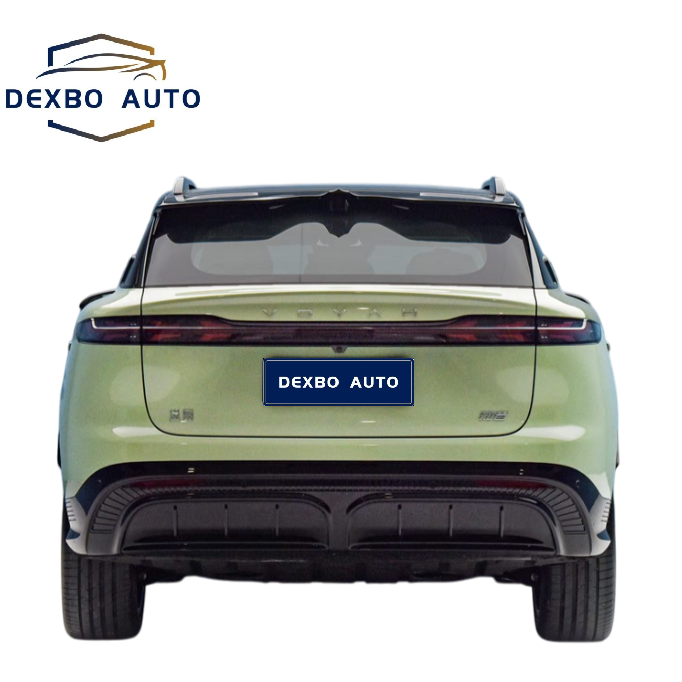
The 2025 Voyah Free is a high - performance SUV that combines power with elegance. Its aerodynamic design is a key factor in its performance. The vehicle features a low - slung body, a well - defined front grille that guides the air smoothly into the engine compartment, and a rear spoiler that helps to reduce lift and drag. These design elements work together to give the 2025 Voyah Free a relatively low wind resistance coefficient. As a result, the vehicle can achieve better acceleration and higher top speeds while consuming less energy.
2025 Voyah Courage
The 2025 Voyah Courage is a sports sedan that showcases Voyah's commitment to aerodynamic excellence. With its aggressive and streamlined body, the 2025 Voyah Courage is designed to cut through the air like a knife. The sharp edges, the contoured sides, and the optimized rear diffuser all contribute to reducing drag and improving stability at high speeds. The low wind resistance coefficient of the 2025 Voyah Courage not only enhances its performance but also gives it a more dynamic and sporty appearance.
The Impact of Low Wind Resistance Coefficient on Voyah Cars
The low wind resistance coefficients of Voyah cars have several significant impacts.
Energy Efficiency: For electric vehicles, a lower Cd value means that the battery can power the vehicle for a longer distance. Since less energy is wasted in overcoming air resistance, the vehicle can travel further on a single charge. This is a crucial advantage in the competitive electric vehicle market, where range anxiety is a common concern among consumers.
Performance: A lower wind resistance coefficient allows Voyah cars to accelerate more quickly and reach higher top speeds. With less drag holding the vehicle back, the engine or electric motor can focus more on propelling the vehicle forward. This results in a more responsive and engaging driving experience.
Noise Reduction: When a vehicle moves through the air, the turbulence created by high air resistance can generate noise. By reducing the wind resistance coefficient, Voyah cars are able to minimize this noise, providing a quieter and more peaceful cabin environment. This is especially important for luxury vehicles, where a quiet interior is often considered a sign of high - quality craftsmanship.
Our Role as a Supplier
As a supplier for Voyah, we play a vital role in helping to achieve these low wind resistance coefficients. We provide high - quality materials and components that are essential for the aerodynamic design of Voyah cars. For example, we supply lightweight and strong materials for the body panels, which not only reduce the overall weight of the vehicle but also allow for more precise shaping. We also offer advanced sealing solutions that help to prevent air leakage and improve the vehicle's aerodynamic performance.
Our engineering team works closely with Voyah's design and development teams. We participate in joint research and development projects, sharing our expertise in materials science and manufacturing processes. By collaborating closely, we are able to contribute to the continuous improvement of Voyah's vehicles, ensuring that they remain at the forefront of aerodynamic design.
Contact Us for Procurement
If you're interested in procuring high - quality components for your automotive projects, especially those related to aerodynamic design, we'd love to hear from you. Our products and services have been trusted by Voyah, and we're confident that we can meet your needs as well. Whether you're a car manufacturer, an automotive parts distributor, or an engineering firm, we're ready to work with you to achieve your goals.

References
- Automotive Aerodynamics Handbook, SAE International
- Aerodynamics for Engineers, Fourth Edition, John J. Bertin and Russel M. Cummings
In conclusion, the wind resistance coefficients of Voyah cars are a testament to the brand's dedication to innovation and excellence in automotive design. Through advanced engineering and collaboration with suppliers like us, Voyah is able to produce vehicles that offer superior performance, energy efficiency, and comfort. If you have any questions or would like to discuss potential procurement opportunities, please don't hesitate to reach out.