

What level of self - driving does BYD's technology reach?
Jan 15, 2026
Leave a message
As a long - standing supplier to BYD, I've had a unique vantage point to observe the remarkable progress of BYD's self - driving technology. In the highly competitive landscape of the automotive industry, self - driving technology is not just a technological marvel but also a key determinant of a company's future competitiveness. So, what level of self - driving has BYD's technology reached?
An Overview of Self - Driving Levels
Before delving into BYD's self - driving technology, it's essential to understand the classification of self - driving levels. The Society of Automotive Engineers (SAE) has defined six levels of driving automation, from Level 0 (no automation) to Level 5 (full automation).
- Level 0: The driver is in full control of all driving tasks, and the vehicle may have some warning systems but no active control.
- Level 1: The vehicle can assist with either steering or acceleration/deceleration, such as adaptive cruise control.
- Level 2: The vehicle can control both steering and acceleration/deceleration simultaneously, but the driver must remain engaged and monitor the driving environment at all times.
- Level 3: At this level, the vehicle can handle most driving tasks under certain conditions, and the driver can disengage from continuous monitoring but must be ready to take over when prompted.
- Level 4: The vehicle can perform all driving tasks within a specific operational domain without driver intervention.
- Level 5: The vehicle can operate autonomously under all conditions, in any environment, without the need for a human driver.
BYD's Current Self - Driving Capabilities
Level 2 and Level 2+ Features
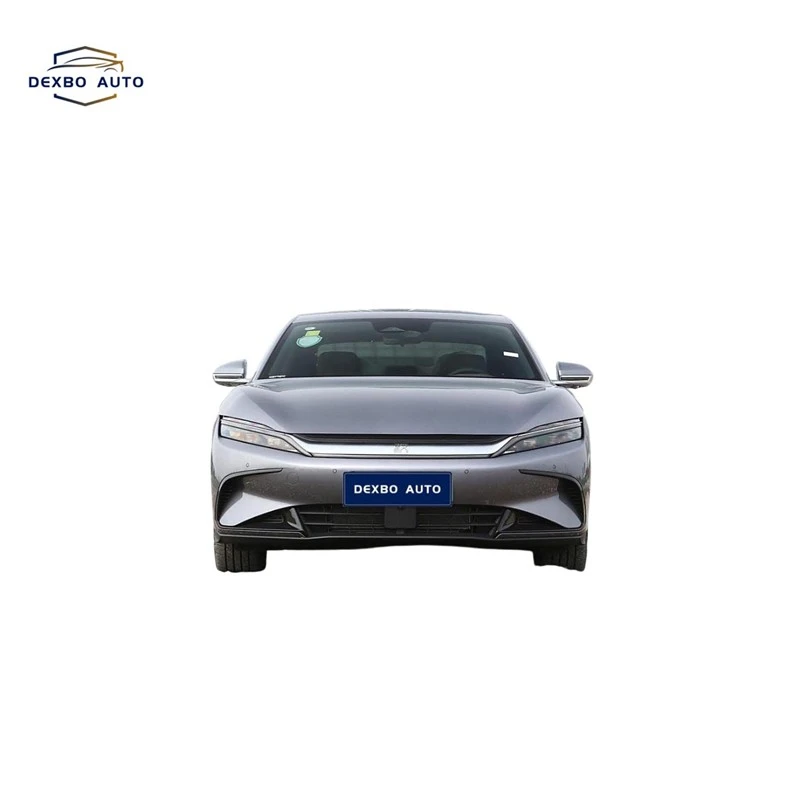
Currently, many of BYD's mass - produced models, such as the New BYD Han, 2025 BYD Qin Plus, and BYD Atto3 Plus, are equipped with advanced driver - assistance systems (ADAS) that fall into the Level 2 and Level 2+ categories.
These models come with a range of features like adaptive cruise control (ACC), which allows the vehicle to automatically adjust its speed to maintain a safe distance from the vehicle ahead. Lane - keeping assist (LKA) helps the vehicle stay within the lane by providing gentle steering inputs. Additionally, some models have automatic emergency braking (AEB) systems that can detect potential collisions and apply the brakes to avoid or mitigate the impact.
The combination of these features enables the vehicle to control both steering and acceleration/deceleration simultaneously, which is the hallmark of Level 2 automation. However, BYD doesn't stop there. The so - called Level 2+ features in some of its vehicles offer more enhanced functionality. For example, the highway driving assist feature can handle lane changes on highways under certain conditions, with the driver still being responsible for overall supervision.
Technological Foundation
BYD's self - driving technology is built on a solid foundation of sensors, software, and computing power. The company uses a variety of sensors, including cameras, radar, and ultrasonic sensors. Cameras provide high - resolution visual information about the surrounding environment, which is crucial for tasks such as lane detection, traffic sign recognition, and pedestrian detection. Radar sensors are used for measuring the distance and speed of objects in front of or around the vehicle, especially in adverse weather conditions. Ultrasonic sensors are typically used for parking assistance, enabling the vehicle to detect obstacles in close proximity.
In terms of software, BYD has been investing heavily in artificial intelligence and machine learning algorithms. These algorithms are used to process the data collected from the sensors, make decisions, and control the vehicle's actuators. The computing power required to run these algorithms is provided by powerful onboard computers, which are continuously evolving to handle more complex tasks and larger amounts of data.
Progress Towards Higher Levels of Automation
Research and Development Efforts
BYD is not content with just staying at the Level 2 stage. The company has been actively engaged in research and development to achieve higher levels of self - driving automation. It has established partnerships with leading technology companies and research institutions to leverage their expertise in areas such as artificial intelligence, sensor technology, and mapping.
One of the key areas of focus is the development of more advanced sensor systems. For example, BYD is exploring the use of lidar sensors, which can provide highly accurate 3D maps of the surrounding environment. Lidar technology can significantly enhance the vehicle's perception capabilities, making it more suitable for higher - level self - driving scenarios.
Testing and Validation
To ensure the safety and reliability of its self - driving technology, BYD conducts extensive testing and validation. The company has testing grounds where it can simulate a variety of driving conditions, including different weather conditions, traffic scenarios, and road types. In addition to on - site testing, BYD also conducts real - world road testing in multiple cities. These tests are crucial for collecting data, identifying potential issues, and improving the performance of the self - driving system.
Challenges and Opportunities
Challenges
Despite its significant progress, BYD faces several challenges in the pursuit of higher - level self - driving technology. One of the main challenges is safety. Ensuring the safety of self - driving vehicles in all possible scenarios is extremely difficult. There are still many edge cases, such as sudden and unexpected events on the road, that are challenging to handle.

Another challenge is regulatory compliance. Different countries and regions have different regulations regarding self - driving vehicles. Navigating these complex regulatory environments can be time - consuming and costly for BYD.
Opportunities
However, there are also numerous opportunities. The growing demand for smart and connected vehicles provides a huge market for BYD's self - driving technology. As consumers become more aware of the benefits of self - driving, such as increased safety, convenience, and reduced traffic congestion, the demand for vehicles with advanced self - driving features is likely to increase.
In addition, the continuous development of technology, such as the improvement of sensors, the increase in computing power, and the advancement of artificial intelligence algorithms, will also provide BYD with more tools to develop higher - level self - driving technology.
Conclusion and Call to Action
In conclusion, BYD's self - driving technology has reached a solid Level 2 and Level 2+ status, with many of its models offering advanced driver - assistance features. The company is actively working towards higher levels of automation through extensive research and development, testing, and validation.
As a supplier to BYD, I've witnessed firsthand the company's commitment to innovation and quality. If you are interested in partnering with BYD, whether it's as a supplier, a technology collaborator, or a customer looking for high - quality vehicles with advanced self - driving features, I encourage you to reach out for procurement and partnership discussions. The future of self - driving is bright, and BYD is at the forefront of this exciting journey.
References
- Society of Automotive Engineers (SAE) "Taxonomy and Definitions for Terms Related to Driving Automation Systems for On - Road Motor Vehicles".
- Industry reports on the development of self - driving technology in the automotive industry.